
 The Tokina 28-70mm f2.6-2.8 ATX PRO
Tech Specs
Focal Length: 28-70mm
Dimensions: 3.2" x 4.8"
Weight: 760g
Maximum Aperture: f2.8
Minimum Aperture: f22
Diaphragm Blades: 8
Front Element: Rotates, extends about an eighth of an inch
Autofucus Mechanism: Micromotor (Canon), Mechanical drive (Nikon)
Closest Focus: 2.5 feet
Filter Size: 77mm
Background
Tokina's 28-70/80 f2.8 lenses have quite a bit of a convoluted history to them. Originally developed by French company Angenieux, Tokina bought the design and rolled out several versions before ceasing production in the mid 2000s. For the forthcoming review, I will be referring to the 28-70 f2.6-2.8 version, which was marketed as being the widest aperture zoom in the world (even though cameras do not recognize the 2.6 aperture. So, is this oldie a goody? Keep reading to find out!
See Also: How To Identify Tokina's 4 Different 28-70 Lenses
Build Quality: 5
Tokina is a company known for high
standards of construction, and its 28-70 f2.6-2.8 ATX PRO lens lives
up to the tough Tokina reputation. Upon picking up the lens, you
immediately notice its sheer weight and perhaps, cool surface. This
lens is solid metal and feels every bit of it, even the filter
threads are metal. Yes, it may be a brick, but it inspires confidence
in that it feels like a true photographic tool and not a toy like a
lot of the newer offerings from both third-parties and now even
manufacturers. The focus ring is the wide, outer one. Switching from
AF to MF is a bit complicated. Unlike newer Tokina lenses, one must
first flip a conventional switch (on the camera for Nikon or on the
lens for Canon) and then snap the focus ring back or forth, depending
on what you want to do. In addition, the clutch has a window where it
can and cannot move. To find the spot, push/pull the ring as you
turn. When the spot is reached, the clutch will engage and the ring
will move, completing the transition. On newer Tokina lenses, you can
simply snap the ring at any place to go from AF to MF and back and
there's no need to flip any switches. The good news is that, like
newer Tokina lenses, the focus ring does not spin in AF mode. In
action, the focus ring is smooth in operation, no slop whatsoever.
The zoom ring is the inner, narrower one. In action, it is smooth
too. Remember, though, this lens will be at least 15 years old, so
action on yours may vary. Both rings are rubberized, highly textured,
and give a good grip. When zooming, the external length of the lens
never changes, but the inner barrel drops about half an inch at the
long end of the zoom and will rotate and move back and forth a few
millimeters when focusing. For Nikon users, don't forget to set the
ring to and then lock it at minimum aperture so that it works
correctly.
Survivability
Here' it's a tale of two lenses. The Canon mount version has a built in motor, which means that, sooner or later, it will die, relegating this to a manual focus lens unless parts can be located. Out of production two decades now, that's unlikely. On the other hand, the Nikon version contains no motor, but is focused via a mechanical linkage that's driven by a motor in the camera, which means that the Nikon version should last forever.
Survivability
Here' it's a tale of two lenses. The Canon mount version has a built in motor, which means that, sooner or later, it will die, relegating this to a manual focus lens unless parts can be located. Out of production two decades now, that's unlikely. On the other hand, the Nikon version contains no motor, but is focused via a mechanical linkage that's driven by a motor in the camera, which means that the Nikon version should last forever.
 |
| The inner barrel extends a few millimeters depending on focus. |
Autofocus Performance: 4
Being an older model lens, the Tokina
28-70 f2.6-2.8 ATX PRO does not feature the latest sonic drive
autofocus technology, but the old mechanical drive design for Nikon
and an integrated micromotor for Canon. For Nikon users, this also
means that this lens won't AF on low-level Nikon bodies, so be sure
to check compatibility before buying. However, for such a design,
autofocus performance is still good by modern standards. Sure, it's
not sonic speed, but for what it is, AF is quick. In terms of
accuracy, this is nothing to sneeze at, either. Focus is dead-on in
all situations except when dealing with nearby, fast-moving subjects.
Low light? No problem! Autofocus is top-notch here, too.
Unfortunately, as is the case with other mechanical drive/old
micromotor lenses, there is no full time manual focus, which means
you need to flip switches and move rings.
 |
| Switching from AF to MF and back is a two-step process: first flip the switch, then move the focus ring accordingly. |
Optics: 4
There is a lot that goes into determining the complete package of optical performance for a camera lens, so let's examine each of them individually. For APS-C shooters, consider the mid frame images here to be corners on your camera as the below images were shot on a FF Nikon D700.
 |
| 28mm test images. |
Lens at 28mm
At 28mm, the
lens shows the famous 'Tokina glow' common to older designs when shot
wide open. The center is sharp but sharpness will fall off through
the corner, by which point things are looking pretty mushy. At f4,
the center and mid frame are razor sharp and there is no improvement
on stopping down. The corner will improve at f5.6 and again, though
to a lesser degree, by f8, at which point the obvious mushiness is
gone.
 |
| 35mm test images. |
At 35mm, the
lens finds its sweet spot, but the 'glow' is still there when shot
wide open. The center is sharp and mid frame exhibits reasonable
sharpness but, by the corner, sharpness clearly falls off though it
is clearly better than at 28mm. F4 and slower for center and mid
frame? See the 28mm commentary. The corner will improve through f8,
at which point the lens is razor sharp from corner to corner, hence
the sweet spot.
 |
| 50mm test images. |
50mm is a
complete repeat of 28 and 35mm in regards to the 'glow,' center, and
mid frame performance. The corners, though, soften quite a bit with
performance similar to at 28mm wide open. Stopping down does help but
in the extreme corner of the frame, the mushiness never completely
disappears.
 |
| 70mm test images. |
70mm
came as a surprise as the 'glow' just about disappears! Additionally,
I would say that the f2.8 performance is actually at its best here
when taken corner to corner. Stopping down to f4 will create razor
sharp images at center and mid frame, like at the other focal
lengths. The corners? Performance is worlds better than 50mm at any
f-stop and mirrors that of the 28mm focal length, though it lags
behind the 35mm setting a little bit.
 |
| Distortion. |
As is the norm with wide angle lenses, the Tokina 28-70 f2.6-2.8 ATX PRO exhibits barrel distortion on the wide end of the focal length spectrum. The good news is that, compared to some other standard zooms, it is very mild and disappears by 35mm. By 50mm, very slight pincushion distortion appears, but is nothing that to many would warrant correction in post-processing.
Vignetting
 |
| Vignetting. |
This
lens displays a lot of vignetting wide open across the focal range
shot on full frame. Stopping down does change things, albeit to
varying degrees. At 28 and 35mm, stopping down to f4 helps a little.
At 28mm, going down to f5.6 further reduces the dark corners, but
some shading will continue to appear even at f8. At 35mm, shading is
drastically reduced at f5.6 and virtually disappears at f8. 50 and
70mm mirror each other in that, at both focal settings, closing up to
f4 drastically reduces vignetting, which virtually disappears by
f5.6.
Crop shooters? Vignetting should be just about non existent.
Crop shooters? Vignetting should be just about non existent.
 |
| Chromatic aberration, 100% crops from 12Mp images. |
While Tokina lenses are known for build quality, they are also known for a less than desirable feature: chromatic aberration, those annoying color fringes that appear in high-contrast situation. The bad news is that the 28-70 f2.6-2.8 ATX PRO does exhibit some false color. The good news is that stopping down from f2.8 to f4 greatly reduces or even eliminates the unwanted color in most cases. As usual, the higher the contrast, the more pronounced the effect
 |
| Flare/ghosts (or lack thereof). |
By and large, I would consider this lens to be on the positive side of the flare resistance spectrum. The lens is most prone to flaring at 28mm because this is when the front element is nearest the end of the lens. As focal length increases and the inner barrel drops back into the lens, the front element becomes more shielded and thus, more resistant to flaring. Generally, this lens doesn't flare/ghost unless you have the Sun (or another extremely bright point source of light) in the corner of the frame. When a bright light is in the center, sometimes you get flare, sometimes not. Go figure. In the center, the lens sometimes flares and sometimes doesn't, go figure. As usual, a hood, whether the standard or a thread-on variety, helps.
 |
| The fact that the inner barrel drops at the long end of the zoom helps reduce risk of flare in itself. |
 |
| This is no macro on APS-C, let alone full frame. |
While this lens is not a macro optic, at can focus reasonably close and make itself a great lens for shooting flowers or similarily-sized subjects.
 If
you have really steady hands and no adverse reaction to ISO 3200+,
astrophotography is possible! Here's Orion among some clouds.
If
you have really steady hands and no adverse reaction to ISO 3200+,
astrophotography is possible! Here's Orion among some clouds.On this lens, infinity is not infinity, which means that you'll manually have to fiddle with the focus on a bright star while using live view magnification. Focus found, thanks to its bright aperture and the insanely good high ISO capabilities of modern cameras, it's possible to photograph brighter constellations hand-held!
Value: 5 (Nikon), 4 (Canon)
When it comes to price to performance
ratio, the Tokina 28-70 f2.6-2.8 ATX PRO is unequaled. Where else can
you get a constant f2.8 zoom with so many positive attributes for in
the $300 range? Nowhere. A good indicator of how good a lens is to
look for it on the used market, see how much it pops up, and how long
it sticks around when it does show up. Generally, the rarer a lens
is, the better it is. In the case of the Sigma and Tamron full
frame-capable constant f2.8 standard zooms of the same vintage,
you'll see them all the time. The Tokinas? They don't pop up all that
often and when they do, they're gone very quickly. This is a great
lens, people know it, and the market shows it.
My only reservation here is for Canon users. Yes, you get way more than what you pay for but, on the other hand, should the motor in your lens fail, you're probably out of luck as this lens has been out of production since the early 2000s and there are probably no parts left with which to fix it. Nikon shooters? Buy with confidence! Because this lens contains no motor but focuses via mechanical linkage, it is practically indestructible and will keep making pictures long after your camera and expensive AF-S Nikkors have died.
My only reservation here is for Canon users. Yes, you get way more than what you pay for but, on the other hand, should the motor in your lens fail, you're probably out of luck as this lens has been out of production since the early 2000s and there are probably no parts left with which to fix it. Nikon shooters? Buy with confidence! Because this lens contains no motor but focuses via mechanical linkage, it is practically indestructible and will keep making pictures long after your camera and expensive AF-S Nikkors have died.
In the field
There's a reason that constant f2.8 zooms are popular, they're just so doggone useful! While slower than primes, a constant f2.8 zoom give the photographer much more flexibility in making pictures, especially when mobility is an issue. Until a 18-70ish constant f2.8 lens comes out, we'll be forced to decide between wide (17-50) and long (28-70) if we want constant f2.8. With all of its positive attributes, the Tokina 28-70 f2.6-2.8 ATX PRO can make the perfect walk around lens, provided you're willing to trade off wide angle for extra reach.
While good at any time of day, the fast Tokina zoom really comes into its own when the light starts to disappear. Simply put, a 2.8 zoom can do things (especially on the long end of the range) that those 3.5-5.6 bundled kit zooms cannot, namely allow the photographer to shoot hand-held in low light without flash, which is good. In less than extreme low light situations, the extra stops of aperture allow the shooter to lower the ISO, thus preserving picture quality.
 Indoor settings in low light are easy for a 2.8 zoom
 Nightscapes, especially at Christmas, are easily possible without a tripod (note, no flare)
 Even darker nightscapes are possible with steady hands
 Nighttime architecture can be very cool
While not a dedicated macro . . .
 |
| However, it is still good for closeups of large objects. . . |
 |
| . . . especially if you can crop a bit! |
Simply put, a 28-70 constant f2.8 optic is a lens that will live on your camera most of the time. Sure, other focal ranges with different applications will be desired at times but, for the majority of walk-around type shooting, such a range will get the job done far more often than not.
 |
| Wildlife is no problem . . . |
 |
| . . . especially if you crop |
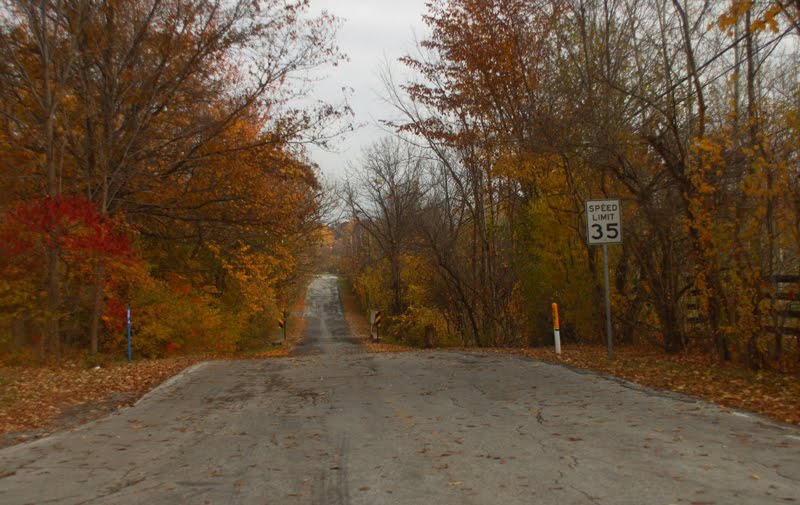
This is a great landscape lens anywhere throughout the range.




Competition
The standard zoom lens competes in a
crowded market segment as such lenses are the go-to optics for many
photographers, pro and amateur. As a result, everyone makes one.
Closest in price to the Tokina are the older Tamron and Sigma models
of similar vintage. Like the Tokina, all are constant f2.8 and are
driven by a micromotor/mechanical drive mechanism. Unlike the Tokina,
they are mostly plastic while the Tokina is solid metal. Moving up
the scale are the current offerings, there are similar optics from
both Sigma and Tamron, as well as Tokina's current 24-70 f2.8. These
lenses can add any combination of the following features: sonic-drive
AF, weather-resistance, and stabilization. The price goes up
accordingly with these lenses typically selling for around $1,000,
give or take a few hundred. Moving to the top of the ladder are the
manufacturer optics from Canon, Nikon, and Sony, which can add any
combination of the already listed features as well as at least
another $500 to the price tag.
Crop shooters? Unless you're planning
to go FF in the near future, skip this lens as its equivalence of
42-105mm on your camera is a bit awkward unless you do most of your
shooting outside. If I was a crop shooter looking for speed in a zoom
lens, I'd go for a constant f2.8 lens in the 17-50-ish range, of
which there are many choices and which will provide an almost
identical field of view that 28-70mm does on FF.
Conclusion: 4.5 (Nikon), 4.25 (Canon)/5
The Tokina 28-70 f2.6-2.8 ATX PRO is an
all-around winner, especially considering its rock-bottom price
point. Some pluses are undeniable. The Tokina's build quality is
top-notch, equaling (and sometimes bettering) the manufacturer's own
$1,500+ version lenses. Again, the price ($300ish) to performance
ratio is unrivaled by anything else. The 'floating' focus ring is
another convenience one normally associates with sonic-drive lenses,
so feel free to grab the lens anywhere when shooting with it. The
conventional drive focus mechanism does not offer full time manual
override, but is nonetheless fast and accurate. The only
mechanical/build gripe is the two-step AF/MF transition. Optically,
this lens has more positives than negatives. The lens has above
average sharpness wide open while distortion, chromatic aberration,
and flare are all well controlled. The only real glaring weakness of
this lens, optically speaking, is the wide-open 'glow' and vignetting
(full frame only) through the range at f2.8 which is, unfortunately,
its main selling point. The good news is that, from f4 on, this lens
is about as good as it gets and, for APS-C shooters, vignetting
should be about nil thanks to the crop factor. With all the good and
so little bad, I whole-heartedly recommend the Tokina 28-70 f2.6-2.8
ATX PRO if you are budget-conscious and/or don't need the latest
features, that is should you be lucky enough to come across one.
 The Tokina 28-70 f2.6-2.8 ATX PRO: an all-around solid workhorse of a lens!
Tokina Fan? Check Out These Reviews!
Tokina 100 f2.8 ATX-PRO MacroTokina 80-200 f2.8 AT-X
Tokina 80-400 f4-5.6 AT-X
Tokina 17 f3.5 ATX-PRO
Like What You Just Read?
Why not check out other great stuff
about photography,
astronomy,
associated
gear, and how
to use it.
Think someone else would find this informative (or at least entertaining)? Use the buttons below to share!
Think someone else would find this informative (or at least entertaining)? Use the buttons below to share!


 Posts
Posts


