Sunday, November 6, 2011

Rejoice! Standard Time Returns

With the end of DST, the Teapot and Summer Milky Way (and all their treasures) make a brief return to the night sky.


Daylight Savings Time is gone and Standard Time (is it standard, it only lasts for just over 4 months) returns, which means good news for astronomers/astrophotographers.
The calendar says November, but the sky still says August, at dusk at least. With the advent of Standard Time returning, we will be treated to one last, brief peek at the summer constellations. So go out just as it gets dark to see the Teapot diving in the Southwestern sky. If you live in a dark area, you can still see the Milky Way, looking like steam, coming out of the Teapot's spout and rising up into Aquila and then through Cygnus. If the visual sight was not enough, a telescope at low power will reveal a swath of nebulae and star clusters, both open and globular, among the starry arch that is the Milky Way. Overhead and to the West, Hercules (two wonderful globulars) and Bootes (globular and double stars highlighted by Izar, which looks green and gold) are still visible. Since the summer constellations are still visible, all we need now is the warm weather!


Humble requests:

If you found this informative (or at least entertaining), help me pay my bills and check out my Examiner pages for space news, cleveland photography, national photography, and astronomy for more great stuff.

If you think this was cool, why not tell a friend?

For something even better, follow this blog.

Saturday, November 5, 2011

Standard Time Returns Tomorrow Morning

It's the first weekend of November, which means that it's time to fall back for those of us living in the United States. While most people are happy for an extra hour of sleep on this one night, for us astronomers, there are perks to Standard Time that are much more far-reaching, such as earlier bnights, a a last chance to see the summer sky, and not having to stay up so late for a winter preview. So, don't forhet to set your clocks back before you go to bed tonight.

So, as daylight Savings Time ends, why not learn a little with some trivia? Enjoy!

* Many ancient civilizations divided their days into 24 hours just like us, but adjusted the hours'
lengths so that there would always be 12 hours of day and 12 of night.

* While he did not propose DST, Benjamin Franklin, while serving as envoy to France,
anonymously published a letter suggesting people rise early (and thus go to bed earlier) to
economize on candles and make use of natural sunlight.

* DST was actually proposed by New Zealand entomologist George Vernon Hudson, who
suggested a two hour daylight savings shift.

* English outdoorsman/builder William Willet also proposed the idea simultaneously. He
suggested advancing the clock during the summer months only

* Both Hudson and Willet had personal stakes in seeing more daylight: Hudson found that
extended time at night would allow more time to collect specimens. Willet hated having to cut
short his golf rounds and see many Londoners sleep through most of the mornings

* In WWI, the Central Powers (Germany, Austria-Hungary, and allies) were the first to use DST
as a coal-saving measure in 1916. England and many allies quickly followed suit. Russia
started using DST in 1917 and the United States adopted the idea in 1918.

* While we shift by an hour today, twenty and thirty minute shifts, and also two hour shifts, have
been used in the past

* Even now, start/end dates aren't standard around the world

* Switch dates are reversed in the Southern Hemisphere

* In some areas, voters have rejected use of DST altogether while in other areas, there are pushes
to eliminate Standard Time and have DST all year long.


Humble requests:
If you found this informative (or at least entertaining), help me pay my bills and check out my Examiner pages for space news, cleveland photography, national photography, and astronomy for more great stuff.

If you think this was cool, why not tell a friend?

For something even better, follow this blog.

Monday, October 31, 2011

Happy Halloween: Don't be Tricked by Fake Ghost Pictures


What happens to us after we die? Do we go on to exist in some non-physical form or is death truly the end? Well, the answer to that question will probably never be found but the uncertainty created by death and longing for lost loved ones created a booming industry for photographers in the later part of the 19th century.

Enter spirit photography.

Almost as soon as the camera had
been invented, some people started thinking that the almost magical photographic medium could be just the thing to prove the existence of spirits, and thus life after death. So far as we know, the first photograph of a supposed spirit was taken in 1860. However, while ghost photos started to appear sporadically in the years after, one event alone produced an onslaught of ghost photos: the Civil War.

The Civil War, which raged from 1861 to 1865 was the bloodiest war in American history, leaving over 625,000 Americans dead,
more than were killed in every other American war combined. Needless to say, with so much sudden death, America in the late 1860s was not a happy country as it would probably have been impossible for any one family not to have been touched by the war. In this nationwide grief, some enterprising photographers saw the potential for big money.

While no one knows who made the discovery, by the 1860s, the
double exposure was common knowledge among photographers. In doing a double exposure, the photographer would take a picture of someone against a black background and then reuse the plate for another shot. Result: an eerie, transparent figure of a person would be superimposed on the final picture. At the time, portraits would often need to be exposed for a few seconds so, by cutting the exposure short, the photographer could further muddle the 'ghost' and make it much harder for a clear image that could be identified by grieving relatives as their lost loved one.

In the wake of the Civil War, some photographers of questionable morals seized on this opportunity and public ignorance to make big, big money.

Of all the supposed spirit photographers, William Mumler of Boston, then New York was the most famous. At the time, getting one's picture taken was a big, and expensive, event. Mumler and other photographers, being careful to guard the double exposure secret, would then advertise that they had the ability to photograph spirits. Needless to say, with all the sudden death wrought by the war, people lined up for photos in the hope that their dead relatives would join them, paying far in excess of the normal portrait price and making the spirit photographers rich in the process.

With the general public ignorance about photography, it seemed as though this fraud could go on indefinitely. Unfortunately for the fraudulent photographers, the good times did not last.

In 1869, William Mumler was
put on trial for fraud, with his accusers, among them, P.T. Barnum, stating that he was using double exposures to fake spirit photographs. While Mumler himself was acquitted of the charges as there was no hard evidence against him, his trial let the big secret of spirit photographers, double exposure, out into the open. Result: once everyone knew about trick photography, people were less inclined to line up for photos when they knew that they were, more than likely, being swindled.

By the turn of the 20th century, spirit photography as well as the whole
spiritualism movement was consigned to the pages of history. However, while the spirit photographs of the 1800s have been essentially proven as fakes, the interest in catching ghosts on camera has not waned in the least. Just Google something to the effect of 'ghost pictures' for proof of this fact.

Ghost pictures can be . . .


Historical


Eerie


Accidental


and comical (ghost snot?!? Seriously?)


Humble requests:

If you found this informative (or at least entertaining), help me pay my bills and check out my Examiner pages for space news, cleveland photography, national photography, and astronomy for more great stuff.

If you think this was cool, why not tell a friend?

For something even better, follow this blog.

Friday, October 28, 2011

Website Structure Changed


For as long as I've been archiving my content not in the AP/Reviews pages, I've just lumped everything into one, 'General,' page with all sorts of astronomy and photography stuff crammed on. Well, as I've not created quite a content library, I decided to make things easier by separating my content into an 'Astronomy' and 'Photography' page, wherein sub-categories can be found under the two, broad umbrella topics. Hopefully, this will make your (and my) life a lot easier!


Humble requests:

If you found this informative (or at least entertaining), help me pay my bills and check out my Examiner pages for space news, cleveland photography, national photography, and astronomy for more great stuff.

If you think this was cool, why not tell a friend?

For something even better, follow this blog.

Wednesday, October 19, 2011

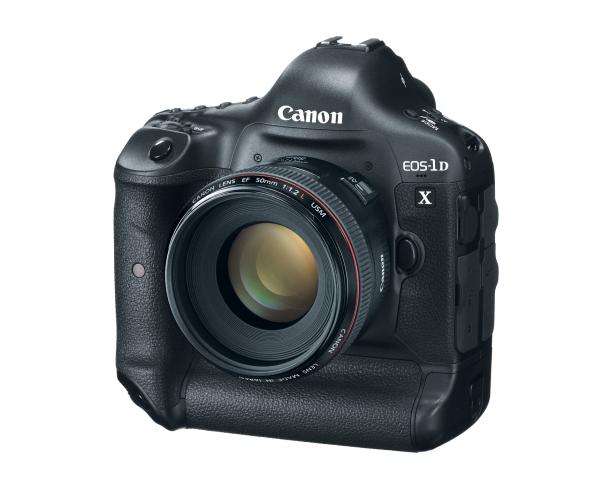
A Camera That Can Do Everything: What a Novel Idea!

The Canon EOS 1D X has just revolutionized photography.


Yesterday, canon made big news in the camera market by announcing its 1D X, a camera that is being marketed as a replacement for both the 1D Mark IV and the 1Ds Mark III. How did Canon manage to do this? Well, how about blending the speed of the sports-focused, 1.3x crop factor 1D-series with the mind-blowing resolution of the 1Ds-series. In the end, one gets a 18Mp, FF camera that can do up to 14 frames per second, all aided by an all-new 61 point AF grid.

For many Canon and non-Canon shooters alike, it' s about time.

Since the dawn of the digital era, the pattern has been this: a manufacturer comes out with a professional-grade camera and then, about a year later, takes the camera, sticks in a much higher resolution sensor, and then starts selling the 'new' model for about 50% more. Example: since the dawn of the professional digital era about 10 years ago, Canon and Nikon have bringing low-resolution, high-speed cameras to market for about $5,000 and then, after the new model has been out about a year, jamming a high resolution sensor into the exact same camera, slowing down its frame rate, and charging $8,000 for it.

Needless to say, these companies have been making killings of of the fact that, despite being labeled 'professional,' its top-tier cameras have been anything but all-around photographic tools, but specialized instruments for a specific purpose (action or still shooting). Now, I'm willing to bet that there are a lot of pro photographers owning both a 1D and 1Ds model on the Canon side and a D3 and D3x o the Nikon side.

Well, with the 1D X, Canon has effectively blended its parallel pro cameras into one model that splits the differences enough to be a general purpose camera. Here are some of the key specs.:


18Mp FF sensor. More than the current 1D IV but less than the 1Ds III. Still, when comparing 21Mp of the 1Ds III to 18Mp of the 1D X, the loss of 3Mp will barely be noticeable as even most pros don't go above 12x18 that often as the Average Joe is often simply unwilling to pay for bigger prints.

14fps capability. The 1D x is the fastest mechanical dSLR on the market, easily beating Nikon's D3 (9fps in F and 11fps in crop mode). This is a win-win.

Three processors for fast data writing. Who can complain here?

400,000 shot shutter life. The highest shutter rating on the market, gotta love it.

100,000 pixel RGB metering sensor. Canon finally catches up with Nikon by utilizing a color metering sensor.

ISO 204,800-capable. Generally speaking, the top ISO an all cameras, no matter their rating, is generally crap, the next-highest is often seen as 'usable' in emergency situations. If this pattern holds true on the 1D x, ISO 51,000 will be respectable in performance. Remember when we all thought ISO 25,000 on the D3 was insane when it was first announced?

61 AF points, 5 are cross-diagonal. One can never have too many AF points, at least according to action shooters. One just has to hope that the 1D III new-AF system issues don't make an encore here, ruining what could be the world's very best action camera. |

AF functions have own menu. Access to AF modes is made quick and easy.

Up to 9 shot multi exposure. A Canon first, the rich, artsy-types will love this.

Improved video mode. I'm not a videographer, but Canon says that the entire movie making experience will be a lot better, so I'm taking their word for it.

Wireless control options for multiple cameras. An old hat for Nikon that first appeared in Canonland on the 7D, many pros with dinosaurish cameras in wireless control regard are rejoicing right now.


Needless to say, the 1D x is the most ground-breaking dSLR in quite some time, perhaps since the Nikon D3 really started the high ISO wars 4 years ago with its fall, 2007 announcement. Either way, the real winner in this announcement is the consumer. For Canon shooters, you have quite a camera to look forward to, provided you can afford its expected $6,800 price. For everyone else, Canon has brought a lot of innovations to the market, features that all other manufacturers will be striving to equal or better in their future cameras.

Hats off to Canon for their great, new camera that will only serve to make photographers happy and spur further technological advances of the future.


Humble requests:

If you found this informative (or at least entertaining), help me pay my bills and check out my Examiner pages for space news, cleveland photography, national photography, and astronomy for more great stuff.

If you think this was cool, why not tell a friend?

For something even better, follow this blog.